Sign up for the on-demand webinar celebrating the launch of the Far Field ASR Leaderboard (FFASR) on Hugging Face, a new benchmark designed to move audio AI evaluation beyond near field assumptions.
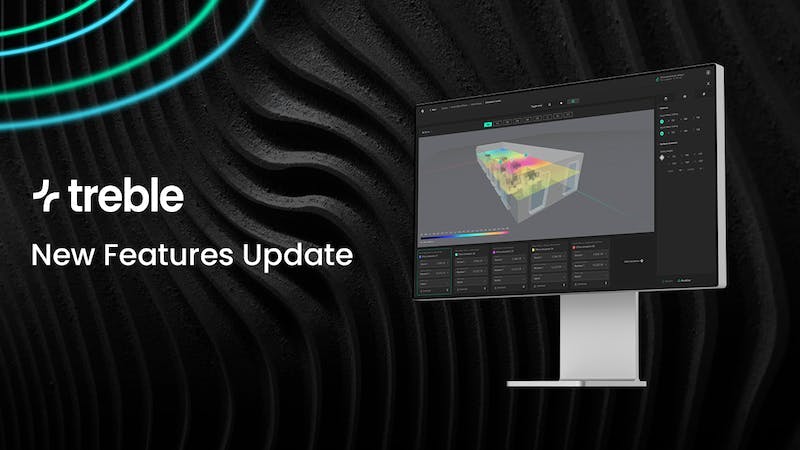
Watch our on-demand webinar focused on the latest advancements in the Treble Web Application, covering new features that improve analysis workflows, visualization, and overall usability. The session includes live demonstrations of upcoming capabilities, a brief overview of Revit and Rhino integrations to streamline design processes, and the introduction of a new materials initiative aimed at improving simulation accuracy and industry alignment. Attendees will gain a clear understanding of how these updates enhance efficiency, reduce setup time, and enable more reliable acoustic design decisions within modern, cloud based simulation workflows.
This study helped to refine Acentech's understanding of the performance of the ceiling system, which absorbs sound quite effectively at most frequencies, and contributes valuable reflections for ensemble intelligibility. Treble helped Acentech to translate between measurements of room decay times and up-close mockup measurements to create a coherent analysis and understanding.
Watch the on-demand webinar unveiling new Treble SDK capabilities for advanced voice processing and audio AI, including dynamic scene simulation, a new source receiver device for own voice and echo cancellation scenarios, and powerful tools for large-scale synthetic data generation. Industry leaders in audio technology and voice AI also join the session to discuss how these advancements elevate product performance and accelerate research and development.
The release is centered around two main areas. First, a substantial expansion of our device modeling capabilities. Second, a new framework for large scale data workflows and acoustic scene generation. Together, these changes further position the Treble SDK as a core infrastructure layer for modern audio algorithm development and virtual prototyping.
We will be at ISE 2026 in Barcelona on February 3-6 where wewill showcase the Treble Web Application for high-fidelity room acoustic simulations, giving visitors a hands-on look at our streamlined cloud-based approach to acoustic prediction and auralization.
Tim Janke, Co-founder and Head of Research at ai-coustics, examines why voice AI systems struggle outside controlled environments and how training data is often the limiting factor.
The article introduces synthetic realism as a data driven approach to teaching models what truly matters in real acoustic scenes, from distance and geometry to room acoustics. It also shows how physics based simulation with the Treble SDK enables spatially accurate training data that translates into more reliable speech enhancement and voice agent behavior in production.
The Treble Revit Plugin is now available, enabling a direct connection between Revit and the Treble Web Application. With a single click, project geometry can move from BIM to acoustic simulation without manual exports, rework, or intermediate file handling.
At CES we will present the Treble SDK, our cloud based programmatic interface for advanced acoustic simulation. The SDK enables high fidelity synthetic audio data generation, scalable evaluation of audio ML models and virtual prototyping of audio products. Visit us in Las Vegas from January 6-9, 2026 at booth 21641.
Through this partnership, Treble and Studio Sound Service are bringing next-generation acoustic simulation and sound design solutions to professionals across the country. With its deep expertise and strong reputation in pro audio, Studio Sound Service is the perfect partner to expand the reach of Treble’s cutting-edge technology, empowering acousticians and sound engineers to design better-sounding buildings and venues.
Treble Technologies and Hugging Face have partnered to make physically accurate acoustic simulation data openly accessible to the global research community.
As part of this collaboration, we are releasing the Treble10 dataset, a new open dataset containing broadband room impulse responses (RIRs) and speech-convolved acoustic scenes from ten distinct furnished rooms. The dataset is now freely available on the Hugging Face Hub for non-commercial research.
This collaboration aims to lower the barrier to entry for audio and speech machine learning research by providing high-quality, physics-based acoustic data that was previously difficult to obtain or reproduce.
Watch our two-part webinar from Treble, and featuring Jonah Sacks and Khaleela Zaman from Acentech. Discover Treble’s new auralization workflow, combining visual overlays and acoustics for a more dynamic presentation, and hear how Acentech applies Treble to real-world projects.
Through this partnership, Treble and Gobos are bringing next-generation acoustic simulation and sound design solutions to professionals across the country. With its deep expertise and strong reputation in pro audio, Gobos is the perfect partner to expand the reach of Treble’s cutting-edge technology, empowering acousticians and sound engineers to design better-sounding buildings and venues.
From September 1 2025 the Treble SDK moves to an itemized token model that replaces the time based approach. The cost of each job is now known in advance and shown in the SDK based on the job inputs rather than an estimate of simulation time. This makes pricing transparent, aligns incentives with faster solvers, and enables value based pricing. Use the token estimator to explore how parameters scale while the SDK always displays the final cost computed from the mesh.
For the L-Acoustics HYRISS showroom, Treble's wave-based simulation was used to preserve low-frequency acoustic performance in a highly constrained space. Traditional tools lacked accuracy below 125 Hz, but Treble enabled precise modeling, absorber calibration, and auralization. Final measurements confirmed simulation accuracy, streamlining design decisions and eliminating the need for additional bass control measures.
Treble is proud to announce a significant upgrade to the IFC import workflow in the Treble Web Application. In June we introduced a series of updates, including some major improvements that significantly improve key aspects of the feature.
Join Treble Technologies for an in-depth webinar on how to instantly generate device related transfer functions (DRTFs) from CAD files using the Treble SDK. This groundbreaking feature allows you to render acoustics for any device, in any environment, without physical prototypes, unlocking a new era of precision in audio algorithm development, virtual prototyping, and machine learning data generation.
See how the Treble SDK transforms audio product development with cloud-native, wave-based simulation. Designed for engineers and R&D teams, it enables rapid prototyping, accurate spatial modeling, and scalable synthetic data generation, all without physical builds. Unlock faster workflows, deeper insights, and better sound design.
Explore how the Treble Web Application redefines acoustic simulation with cloud-native speed, intuitive design workflows, and hybrid solvers. Built for architects, acoustic consultants, and engineers, Treble integrates seamlessly with BIM tools and enables early, accurate acoustic analysis. Learn how innovations like IFC import, real-time collaboration, and advanced auralizations are transforming design processes across the industry.
While audio ML has made huge strides through synthetic voice diversity, it often overlooks the acoustic environments that shape real-world sound. The "RIR Paradox" highlights this gap, using simplistic or inaccurate Room Impulse Responses limits model robustness. Treble SDK addresses this by offering scalable, physics-accurate RIR simulation, unlocking new levels of realism and generalization for audio AI.
Treble is excited to be part of the 2025 IEEE International Conference on Acoustics, Speech, and Signal Processing (ICASSP 2025), the premier global event for signal processing research and innovation. Taking place in Hyderabad, India, from April 6 to April 11, 2025, ICASSP is the flagship conference of the IEEE Signal Processing Society, bringing together leading researchers, industry pioneers, and technical experts to explore the latest breakthroughs in the field.
In February 2025, we launched the most significant update in Treble’s history, enhancing our web application with cutting-edge features that push the boundaries of acoustic simulation. This update delivers unprecedented accuracy, efficiency, and flexibility to our users, reinforcing Treble’s position as the leader in cloud-based sound simulation. Below is a comprehensive recap of all the new features and updates included in this release.
Treble and MBI are bringing next-generation acoustic simulation and sound design solutions to professionals across Korea. MBI's deep expertise in acoustic consultancy and soundscapes makes them the perfect partner to expand the reach of Treble's cutting-edge technology, empowering engineers, and designers to create better-sounding spaces.
Audio AI systems are only as good as the data they are trained on. As voice interfaces, smart devices, and autonomous systems become more widespread, the need for high quality, realistic, and scalable audio data is growing rapidly.
Unleash the next era of sound simulation with Treble SDK 2.0 - a major upgrade that’s set to redefine acoustic technology. Experience the game-changing capabilities of our most advanced SDK yet. From synthetic audio data generation and machine learning validation to product virtual prototyping, and automotive acoustics, Treble SDK 2.0 is built to revolutionize sound simulation at scale.
Re-watch our exclusive webinar showcasing the future of sound simulation and acoustic design. Treble: Discover Treble’s latest transformative updates, including advanced solvers, IFC integration, and tools redefining precision in acoustic simulation. L-Acoustics: Learn from Simon Brown of L-Acoustics how Treble’s technology empowered the creation of the HYRISS showroom, a benchmark for immersive sound and adaptive acoustics. Arup: Hear from Aaron Willette and Shane Myrbeck of Arup, sharing real-world applications of Treble in innovative projects shaping the built environment.
L-Acoustics, a global leader in professional audio, announces its participation in Treble Technologies' Series A funding round, alongside a strategic partnership between the two companies.
Watch our expert training webinar with Ólafur Hafstein Pjetursson, Product Manager at Treble Technologies. In this session, we dive deep into the latest cutting-edge features of Treble including Reflection Tracking and the Material Builder with impedance import. Discover how these innovative tools can enhance the accuracy of your acoustic models, streamline your workflow, and unlock new possibilities in your simulation projects. Gain valuable insights from real-world applications and industry-leading expertise to stay at the forefront of acoustic simulation technology.
Treble Technologies, a next-generation sound simulation and synthetic audio data generation technology company, has raised €11M in a Series A round. The investment will be used to expand the Treble team, enhance R&D efforts, forge new enterprise clients, and tap into new markets.
We will be at InfoComm Las Vegas 2024 on June 12-14! Step into the world of advanced sound simulation with Treble Technologies and discover how our cutting-edge technology is revolutionizing the way sound is experienced and designed. Engage with our experts, view live demonstrations, and explore how our technology can transform your projects.
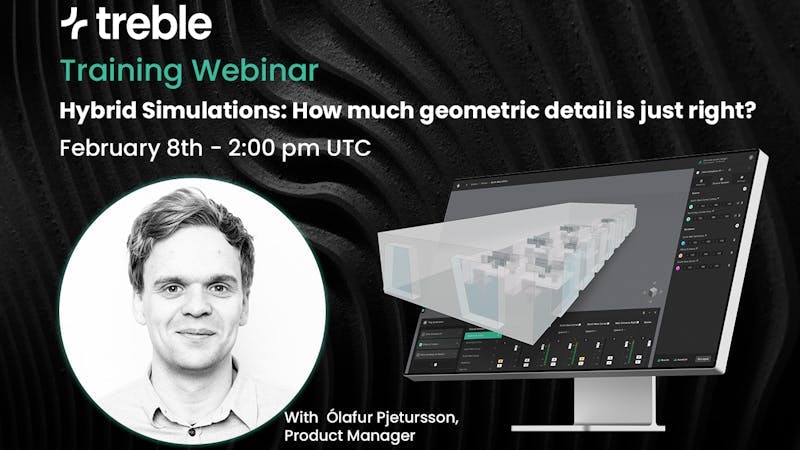
Watch our training webinar with Ólafur Hafstein Pjetursson, Product Manager at Treble Technologies. This session explores the optimal level of geometric detail necessary for accurate and efficient hybrid acoustic simulations, combining wave-based and geometrical acoustics methods. Learn from industry-leading insights and real-world applications to enhance your acoustic simulation projects.
This blog delves into how Treble’s geometrical solvers operate, their technical strengths, and why they’re indispensable for acousticians and design professionals seeking efficient, scalable sound solutions.
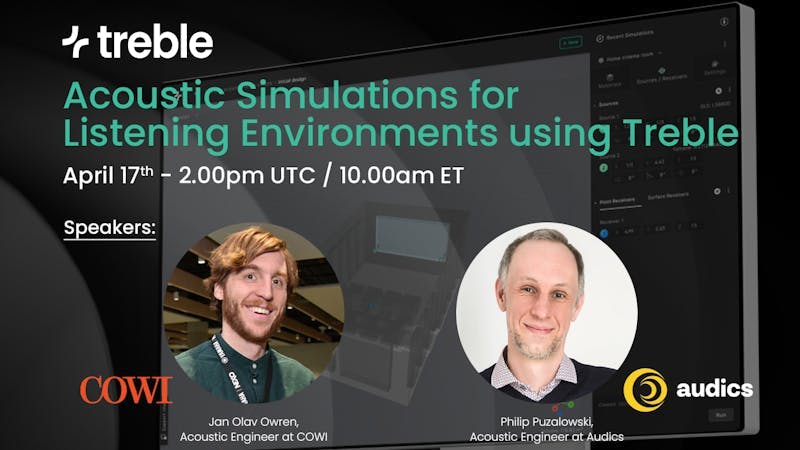
Watch our engaging customer success webinar featuring insightful presentations from two valued customers on their utilization of Treble for simulating and enhancing the acoustics of listening spaces,
In this blog, we’ll explore the fundamentals of wave-based simulations and how Treble harnesses this powerful technique to deliver cutting-edge acoustic solutions for real-world applications.
We will be present at the 2024 BIM World Paris convention on April 3 - 4. Come meet us in person to discuss how Treble can integrate in your BIM workflow, and how Treble can help you make better sounding buildings.
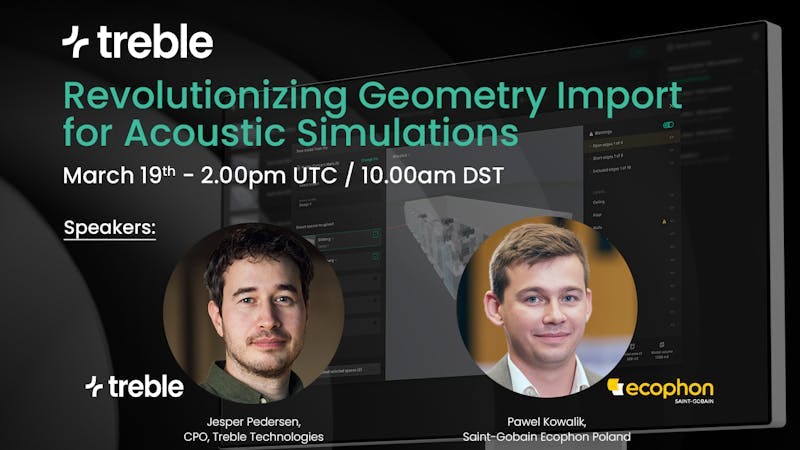
Watch our Geometry Import webinar on demand, in which Jesper Pedersen, CPO, showcases some of the new and exciting geometry import features that are coming to Treble including IFC import, multi-space import, and BIM integration. In addition to this Pawel Kowalik - Technical Marketing Manager at Saint-Gobain Ecophon Poland demonstrates how you can use LiDAR technology to import your models into Treble and run your simulations.
In the hustle and bustle of modern urban life, it's easy to overlook the impact that our surroundings have on our health and wellbeing. With focus normally on the aesthetics of surroundings, an often underestimated factor in this equation is acoustics, the science of sound. Acoustics not only shapes our auditory experience but also plays a pivotal role in our public health and wellbeing. In this blog post, we will delve into the intricate relationship between acoustics and our physical and mental health, highlighting its significance in creating harmonious environments.
Join our training webinar with Ingvar Jónsson, Senior Acoustic Engineer. Ingvar will guide you through the workflow of importing your own source definitions into your geometries for loudspeaker modeling. This is a live interactive webinar where you will be able to ask any questions you may have.
We are pleased to announce that Treble has achieved SOC 2 Compliance. This achievement reflects our ongoing commitment to maintaining the highest standards of data security and privacy.
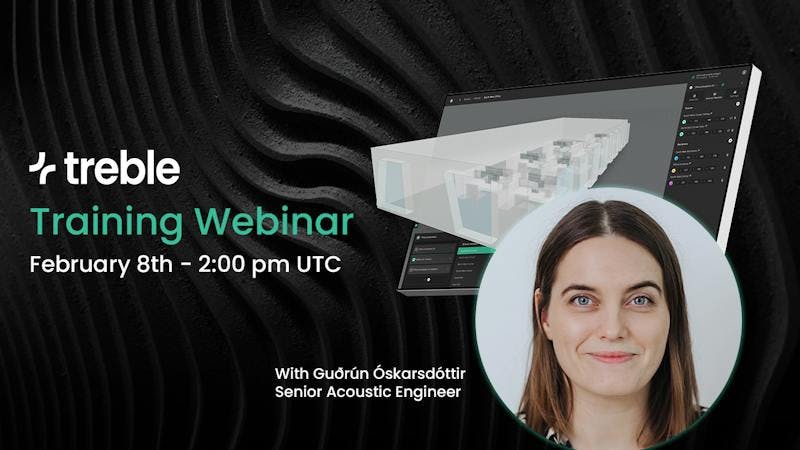
Watch our training webinar with Guðrún Óskarsdóttir, Senior Acoustic Engineer, who will talk you through the Treble workflow, from Geometry import to the Auralization in Treble Acoustic Simulation Suite. Learn how to optimize your acoustic simulations using Treble Acoustic Simulation Suite.
We’re thrilled to announce that we have been recognized as an impactful software solution for businesses by Gartner Digital Markets. Treble Acoustic Simulation Suite has been recognized in the simulation software category.
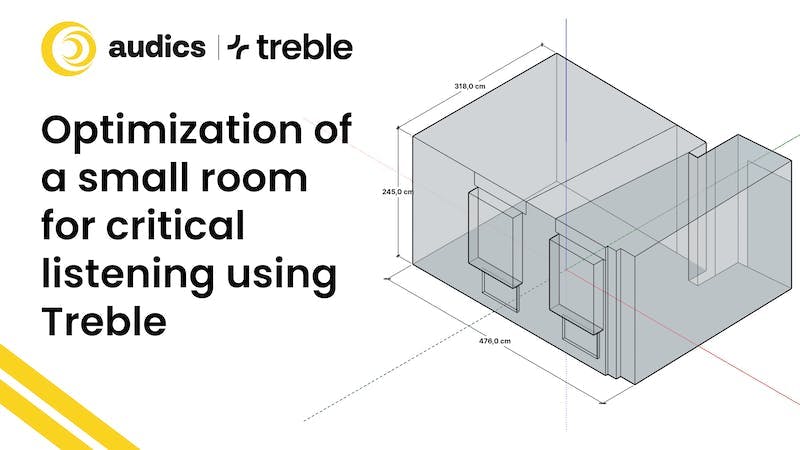
This paper is the first in a three-part case study to demonstrate the accuracy and benefits of wave-based 3D simulation of a small voice production studio. With the cloud-based Acoustic Simulation Suite from Treble Technologies, audics is able to analyze and optimize sound propagation in rooms based on wave theory.
We are thrilled to announce that we have been shortlisted as a 2023 Tech Champion by the Financial Times, one of the world’s leading business news and information organisations!
Re-watch our training webinar on demand, in which our acoustic expert Johannes Einarsson talks you through the new features of Treble Acoustic Simulation Suite: CLF file import, and open-plan office parameters (ISO3382-3). Learn how to optimize your acoustic simulations using Treble Acoustic Simulation Suite.
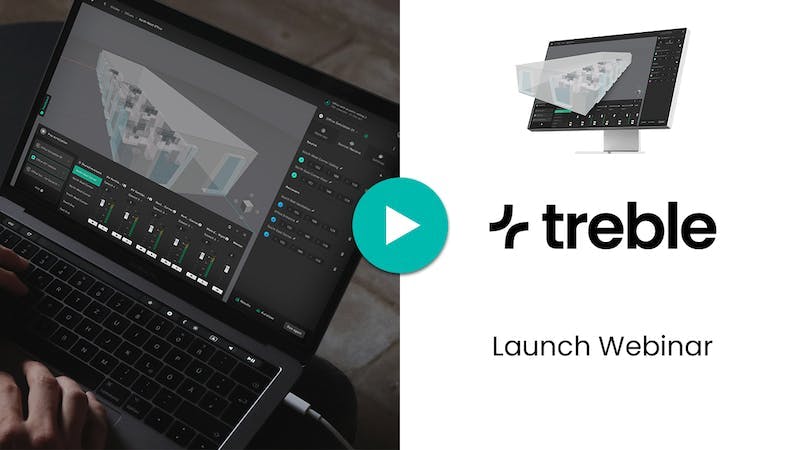
Watch our Treble SDK Launch Webinar on-demand. The SDK is packed with powerful pre- and post-processing functionality to facilitate an efficient workflow and allow for simulation-based workflows that were previously impossible. Say goodbye to collecting data using measurements and instead create much larger datasets of rich and realistic audio scenes in just a few hours.
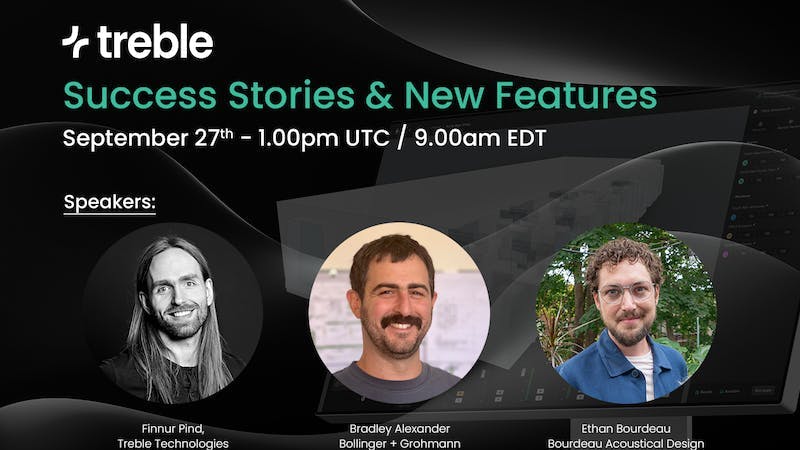
Re-watch this exclusive webinar in which you will hear from some of our customers who have used Treble’s Acoustic Simulation Suite to achieve amazing results in their acoustic design and engineering. In this webinar are acoustic experts Bradley Alexander& Ethan Bourdeau, as well as Finnur Pind showcasing the newest features of Treble Acoustic Simulation Suite
Don’t miss the chance to learn from our CPO, Jesper Pedersen, in a free training webinar on Tuesday 19th of September, at 1.00pm UTC. He will show you how to use Treble Acoustic Simulation Suite effectively for your acoustic projects. You will learn how to import your geometries, compare design iterations in our auralizer, and set source a receiver positions, and much more. You will also have the opportunity to ask questions about Treble.
The sound field in a rectangular empty room becomes more or less two-dimensional with a porous ceiling absorber since the vertical sound field energy diminishes more quickly than for the horizontal sound field. In such a condition, the porous ceiling absorber can lower the reverberation time effectively at low frequencies. This documentation shows how the sound field changes with two different porous layer configurations in both measurements and treble simulations.
Re-watch our recent training webinar in which Jesper Pedersen goes through all the steps involved in the modeling workflow and creating acoustic simulations for in-depth analysis.
The study measured a medium-sized room of 80 cubic meters to test the capabilities of Treble's wave-based solver and solving for full-bandwidth up to 8kHz. Both mono and binaural room impulse responses (RIR) were measured using a directive source and a KEMAR mannequin at various positions. The source is modeled by including the geometry of the speaker box directly into the 3D room model and then applying an impulsive surface velocity excitation to the loudspeaker membrane. The simulations were carried out on a cluster with six Nvidia A100 GPU cards running in parallel. Results are compared and presented for Energy Decay Curves and derived acoustical parameters, reverberation time T20 and early decay time, for the mono RIR. The binaural RIR results are compared both in the frequency domain and in the time domain.
We are thrilled to announce that our newest update for Treble Acoustic Simulation Suite is now live, and it comes with a bunch of exciting features that will make your acoustic simulations more realistic, interactive, and fun!
In this post, we will walk you through some of the highlights of this update, and show you how you can use them to create and analyze amazing acoustic simulations.
The round robin 3 study examined a small but complex room with special diffusors. The room was measured and the material properties of all surfaces in the room were obtained in octave bands 125 Hz - 4k Hz. The study used over 20 simulation tools to simulate the studio room of PTB institute. Results were given both with open curtains and closed curtains. The Schroeder frequency of this room is calculated Hz. A strong standing wave was present in the room and a large part of the wall area could be covered with curtains.
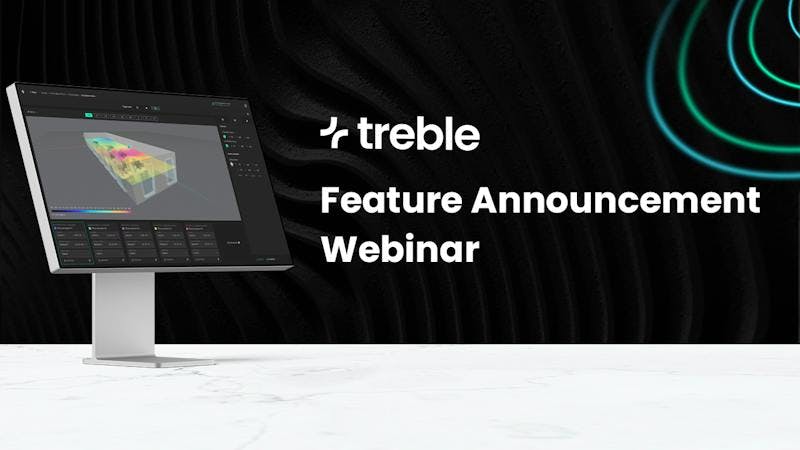
Re-watch our feature announcement webinar with Finnur Pind, CEO & Co-founder, for a first look at some of the exciting new features that we are bringing to the Treble Acoustic Simulation Suite including: Surface Receivers New and improved Results View Own sounds in Auralizer: use your own sound files in the Auralizer for more personalized listening experiences Accelerated image source method Live chat support and more!
The sound field in a rectangular empty room becomes more or less two-dimensional with a porous ceiling absorber since the vertical sound field energy diminishes more quickly than for the horizontal sound field. In such a condition, the porous ceiling absorber can lower the reverberation time effectively at low frequencies. This documentation shows how the sound field changes with two different porous layer configurations in both measurements and treble simulations.
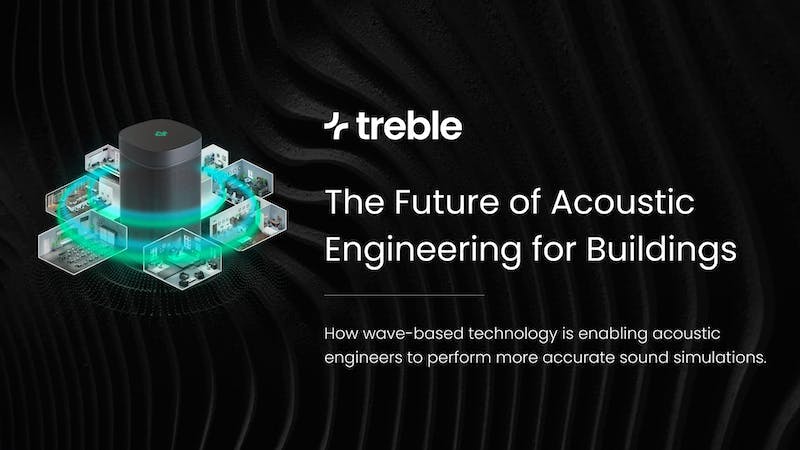
Incorporating sound into design schematics has long been a major pain point for acoustic engineers and consultants. Attempting to calculate the wave equation can be an extremely laborious and time-consuming task restricting the speed and workflow of projects. Currently, the predominant geometrical acoustics ( GA) approach to sound simulation is, although useful, only approximate failing to offer the required accuracy at low and medium frequencies. However, recent developments in wave-based acoustics are ushering in a new age of sound simulation, in which engineers can reliably and accurately model complex wave phenomena within virtual environments.
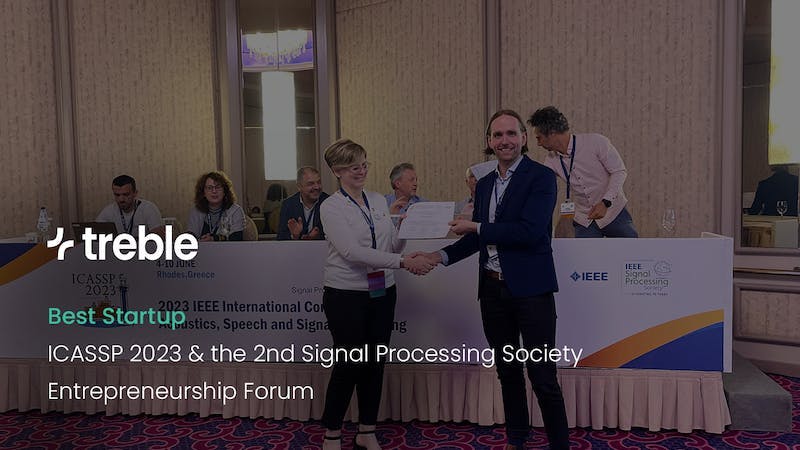
The International Conference on Acoustics, Speech, and Signal Processing (ICASSP) 2023 and the 2nd Signal Processing Society Entrepreneurship Forum announced Treble as the winners of this year’s Startup Fair.
We are excited to announce that we will be attending ICASSP 2023, the world’s largest technical conference focused on signal processing and its applications. The conference will take place from June 4th to 9th in Rhodes, Greece.
Are you interested in learning about the future of sound simulation and spatial audio? On March 1st, we launched Treble, a new cloud-based, wave-based sound simulation platform that is revolutionizing the world of acoustics.
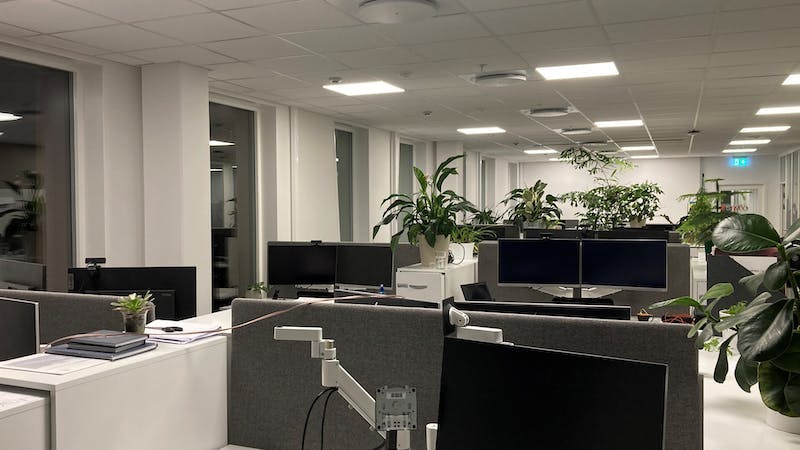
Designing an open-plan office with optimal acoustics can be a challenge for architects and engineers alike. That's why the engineering consultancy firm COWI turned to Treble
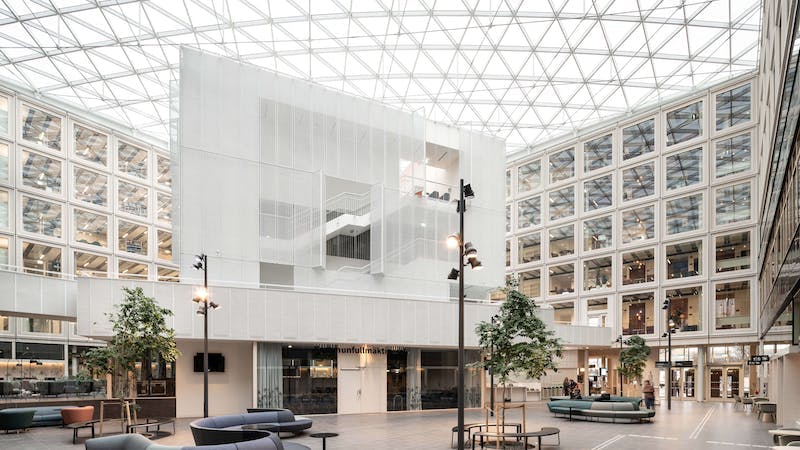
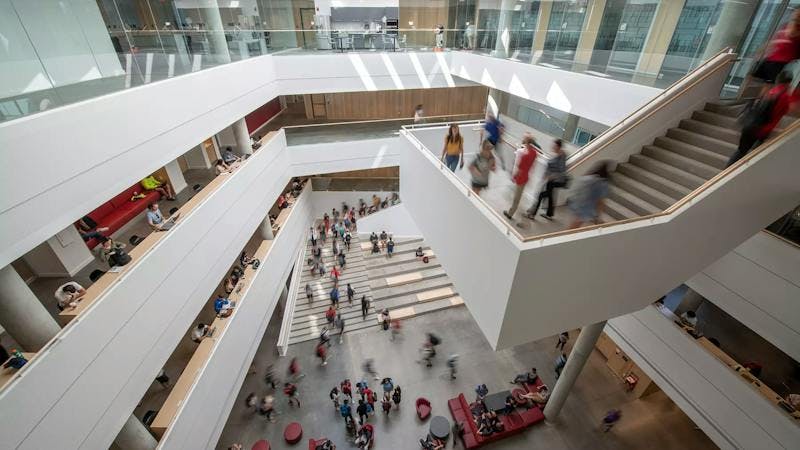
Using Treble, architects were able to virtually mock up three different lecture halls to showcase how each would sound, enabling the university Dean to choose the one with the best acoustics.
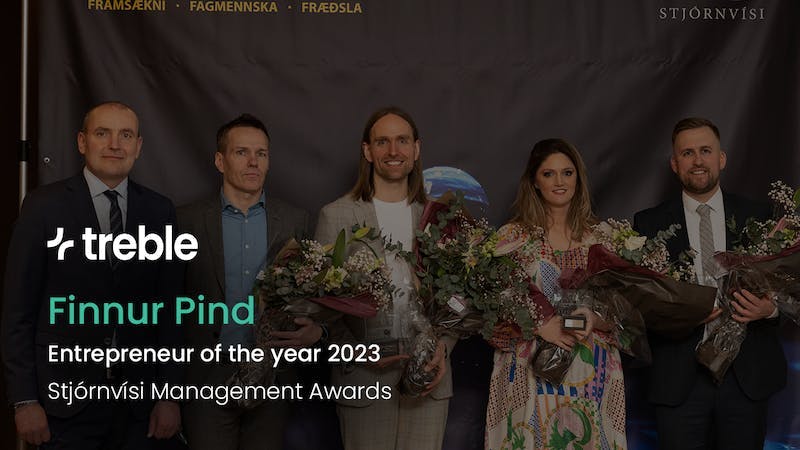
Dr. Finnur Pind, CEO and co-founder of Treble Technologies, has been named the Entrepreneur of the year 2023 at the Stjórnvísi Management Awards in Iceland. The prestigious awards ceremony, held on 20 February at Nauthóll with the presence of the President of Iceland, recognized the outstanding achievements of Icelandic managers in various fields.
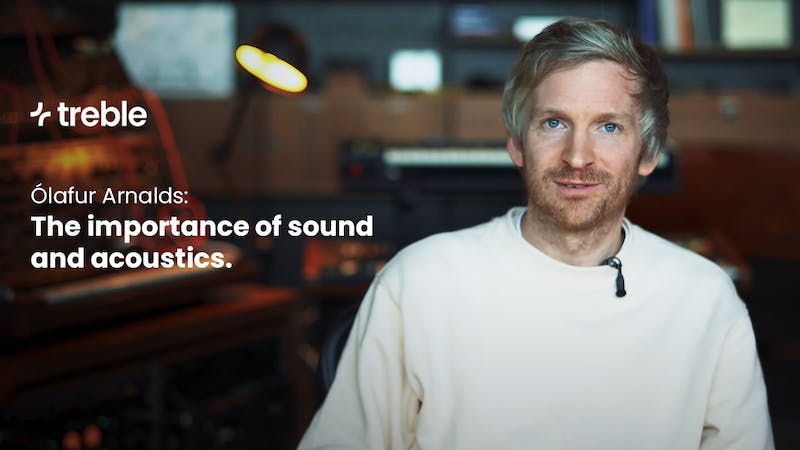
We visited our good friend Ólafur Arnalds in his studio in Reykjavík, Iceland. There we had a nice talk about the importance of sound and acoustics and the effects it can have on us.
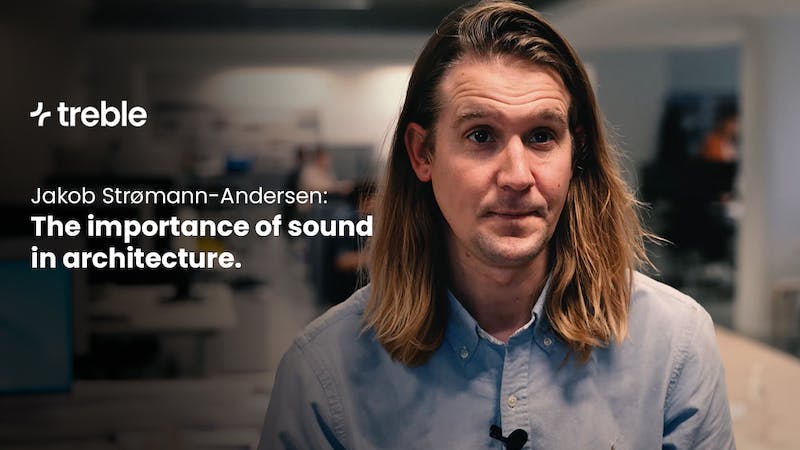
We visited our good friend Jakob all the way to Denmark. Jakob is a Director of Innovation and Sustainability and partner at Henning Larsen, where he is responsible for developing innovative visions and solutions within the field of sustainable design.